






















What is a TIJ printer?
TIJ printer is printer based on thermal inkjet technology when the ink is pushing out of nozzles by activating heat. In the coding and marking industry, this type of technology is becoming increasingly popular due to its simplicity and maintenance-free nature. The system is modular and includes a controller, print driver, cables as well as a print cartridge with a print head inside. When you replace a cartridge, you replace the print engine as well.
Thermal inkjet Printers RNJET
Hi-resolution & Maintenance free
Print up to 24mm (1″) in height, and up to 180m/min dynamic database.
Incredible Value, Unprecedented Performance of H-Series RNJet Inkjet printers
FREE-MAINTENANCE CODER
This printer requires 0-maintenance, keeping your line moving smoothly
PRINT ORIENTATION
RNJet inkjet printers could print at any angle. Some of our clients print upwards.
DATABASE PRINTING
Printing variable data, unique database, GS1 Data Matrix & UDI, Track and Trace, ability to print from PLC and NiceLabel
PRINT HEADS
Single print head system or dual print head system.

Let’s face it – maintenance tasks can be a buzzkill, especially when you have a business to run. Thankfully, the industrial thermal printer comes to the rescue with its maintenance-free capabilities. Bid farewell to time-consuming cleaning routines and say hello to uninterrupted printing bliss! The Thermal Inkjet Printer’s technology ensure pristine prints every time, without lifting a finger.
Range of RNJet H-Series Printers
Explore the possibilities of A+++ thermal inkjet printers…
One Controller. Infinite Possibilities.
Maximize productivity with a single controller. RNJet drives up to 24 print heads with unbeatable power and efficiency.

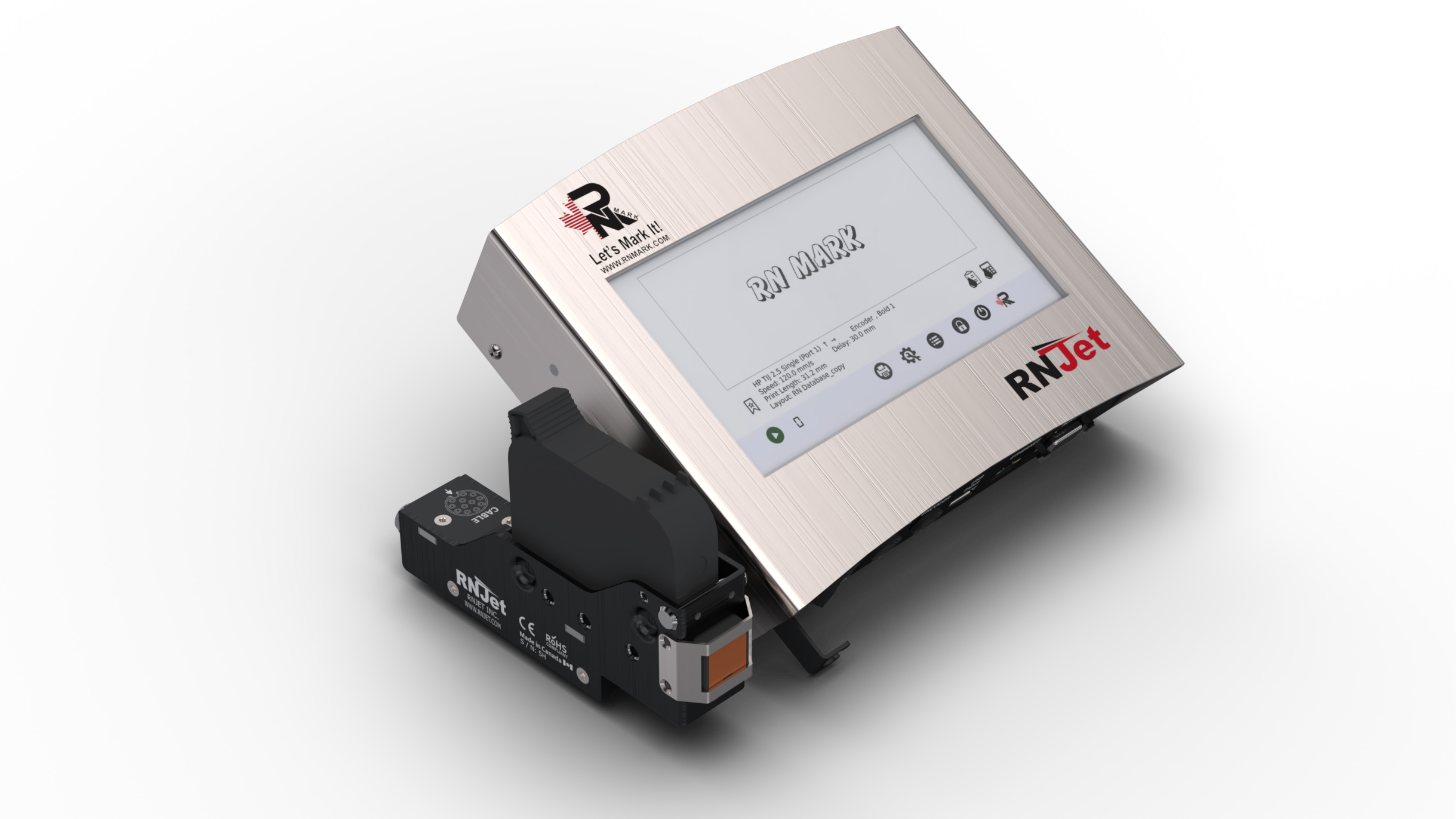
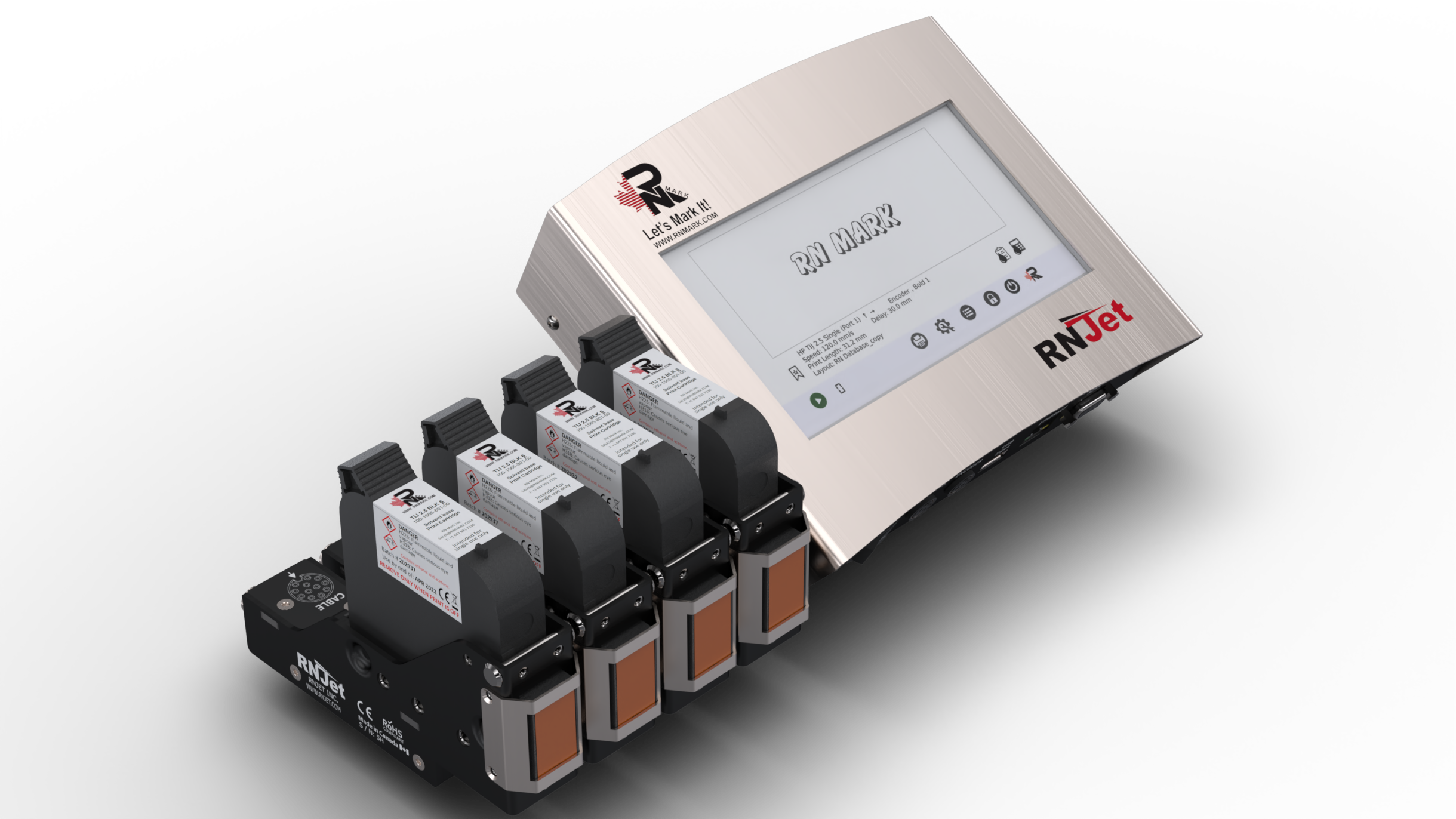
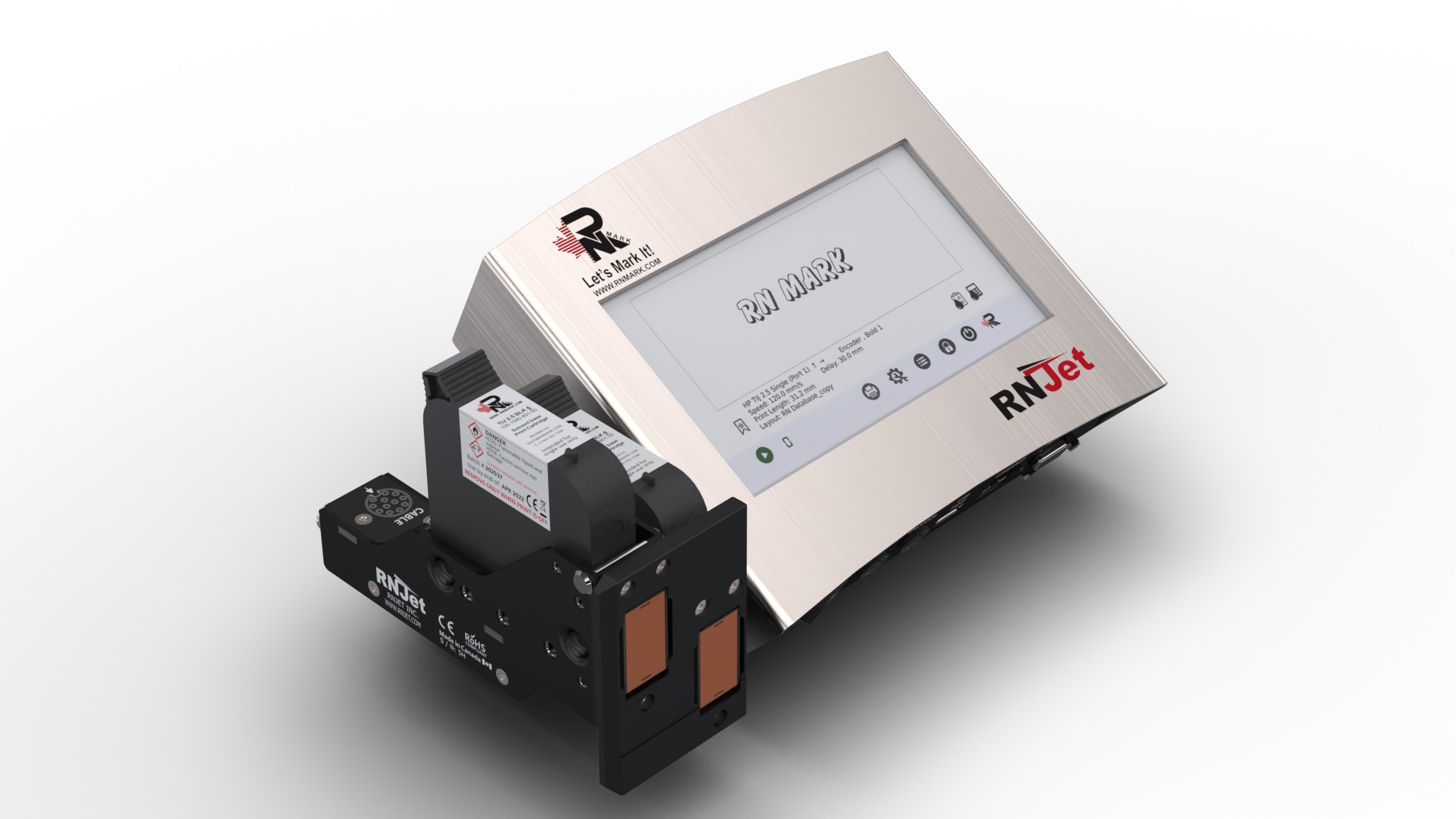
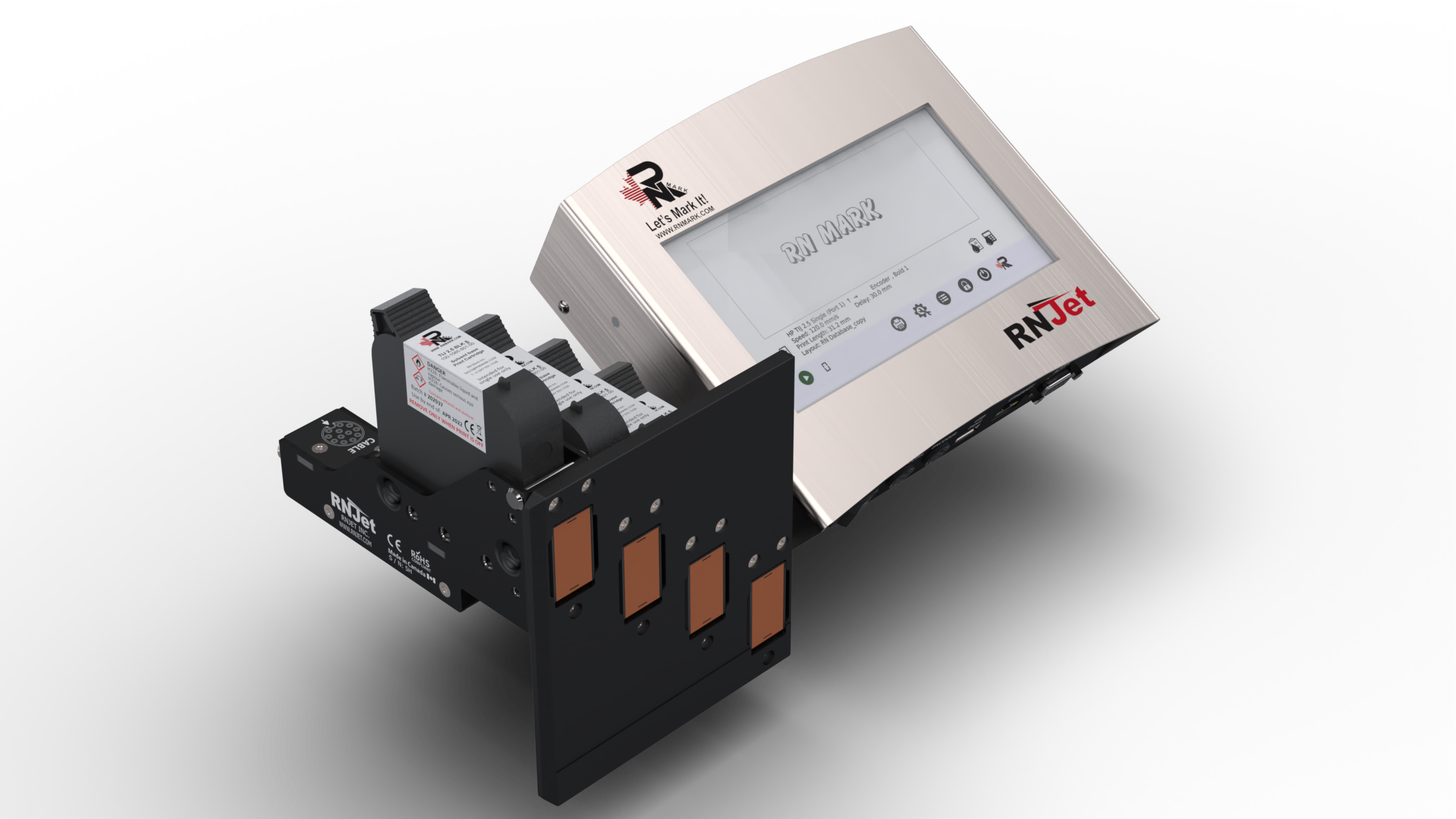
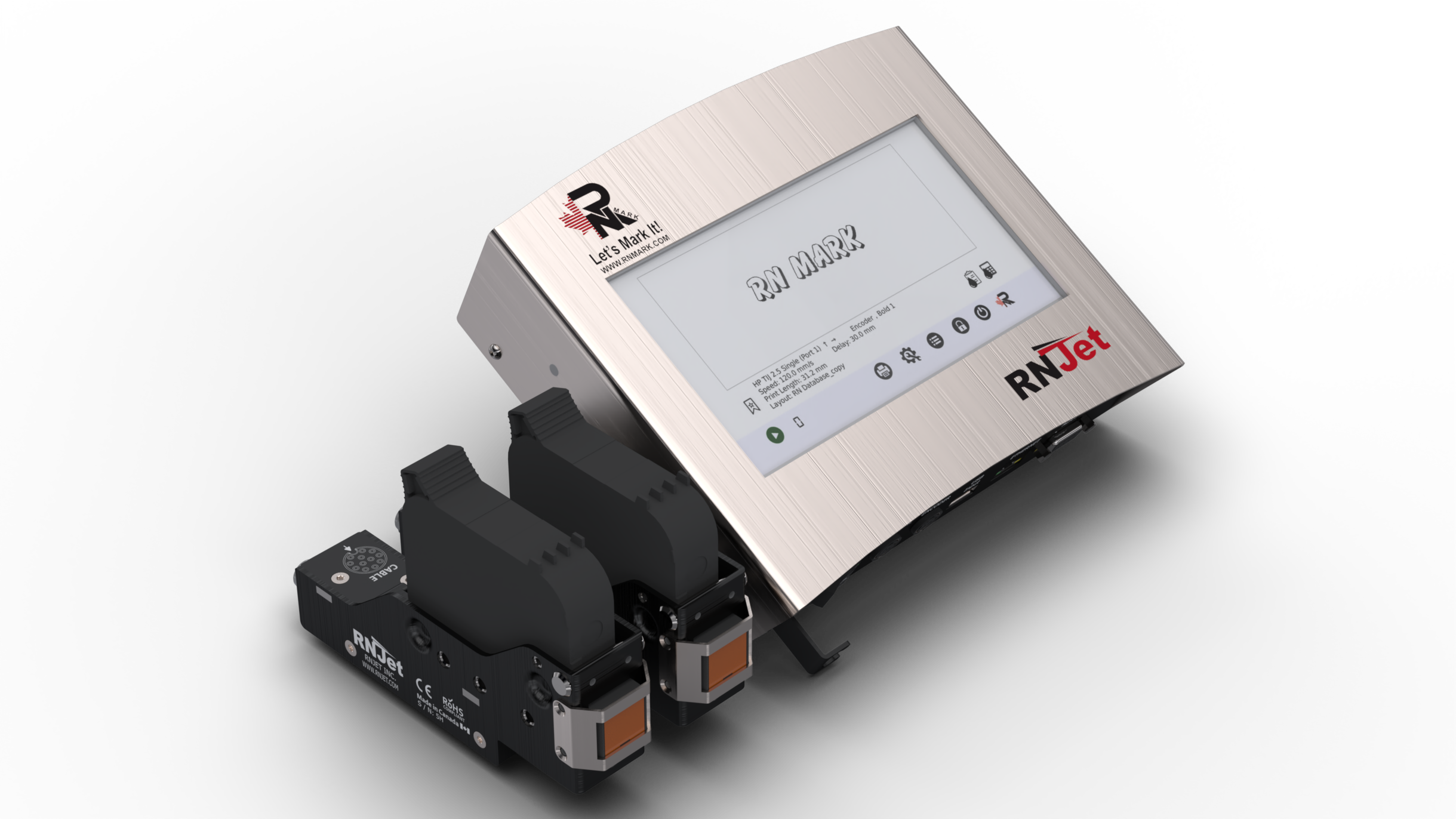

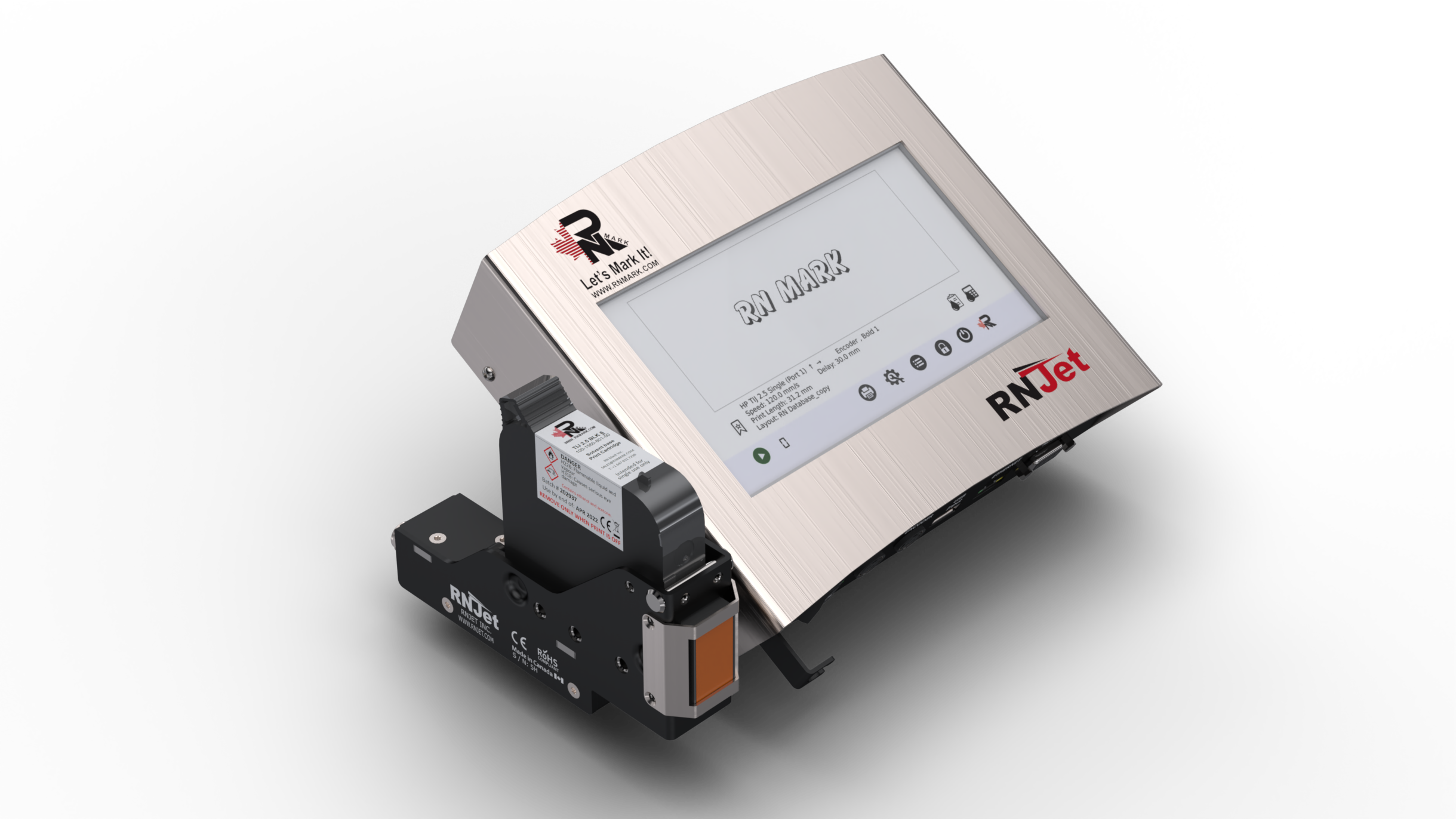
Find Your Perfect Fit: RNJet Multi-Head Printer Comparison
| Feature Comparison | RNJet H1 | RNJet H2 | RNJet T1 |
|---|---|---|---|
 | | |  |
| Technology | Thermal Inkjet | Thermal Inkjet | Thermal Inkjet |
| Ink System | Cartridge | Cartridge | Cartridge |
| No. of Print Heads | 1 | 2 | 1 |
| Max. Print Height | up to 12.7 mm | up to 12.7 mm (each printhead) | up to 25 mm |
| Printing Distance | up to 8 mm | up to 8 mm each head | up to 8 mm |
| Printing Speed | 150 dpi up to 180 m/min 300 dpi up to 90 m/min | 150 dpi up to 180 m/min 300 dpi up to 90 m/min | 300 dpi up to 90 m/min |
| Ink Types | For Porous: Water Based/Solvent Based For Non-Porous: Solvent Based | For Porous: Water Based/Solvent Based For Non-Porous: Solvent Based | For Porous: Water Based/Solvent Based For Non-Porous: Solvent Based |
| Ink Drying Time for Non-Porous Material | 1 to 3 seconds | 1 to 3 seconds | 1 to 3 seconds |
| Communication | TCP/IP, RS232 for database, barcode scanners, Ethernet, USB | TCP/IP, RS232 for database, barcode scanners, Ethernet, USB | TCP/IP, RS232 for database, barcode scanners, Ethernet, USB |
| Free Technical Support | ✔ | ✔ | ✔ |
| Maintenance Free | ✔ | ✔ | ✔ |
| 7" Touch Screen Controller | ✔ | ✔ | ✔ |
| Windows Based Software | ✔ | ✔ | ✔ |
| Text, Barcode, Graphics, LOGO, Database Coding | ✔ | ✔ | ✔ |
| High-Speed Serialisation | ✔ | ✔ | ✔ |
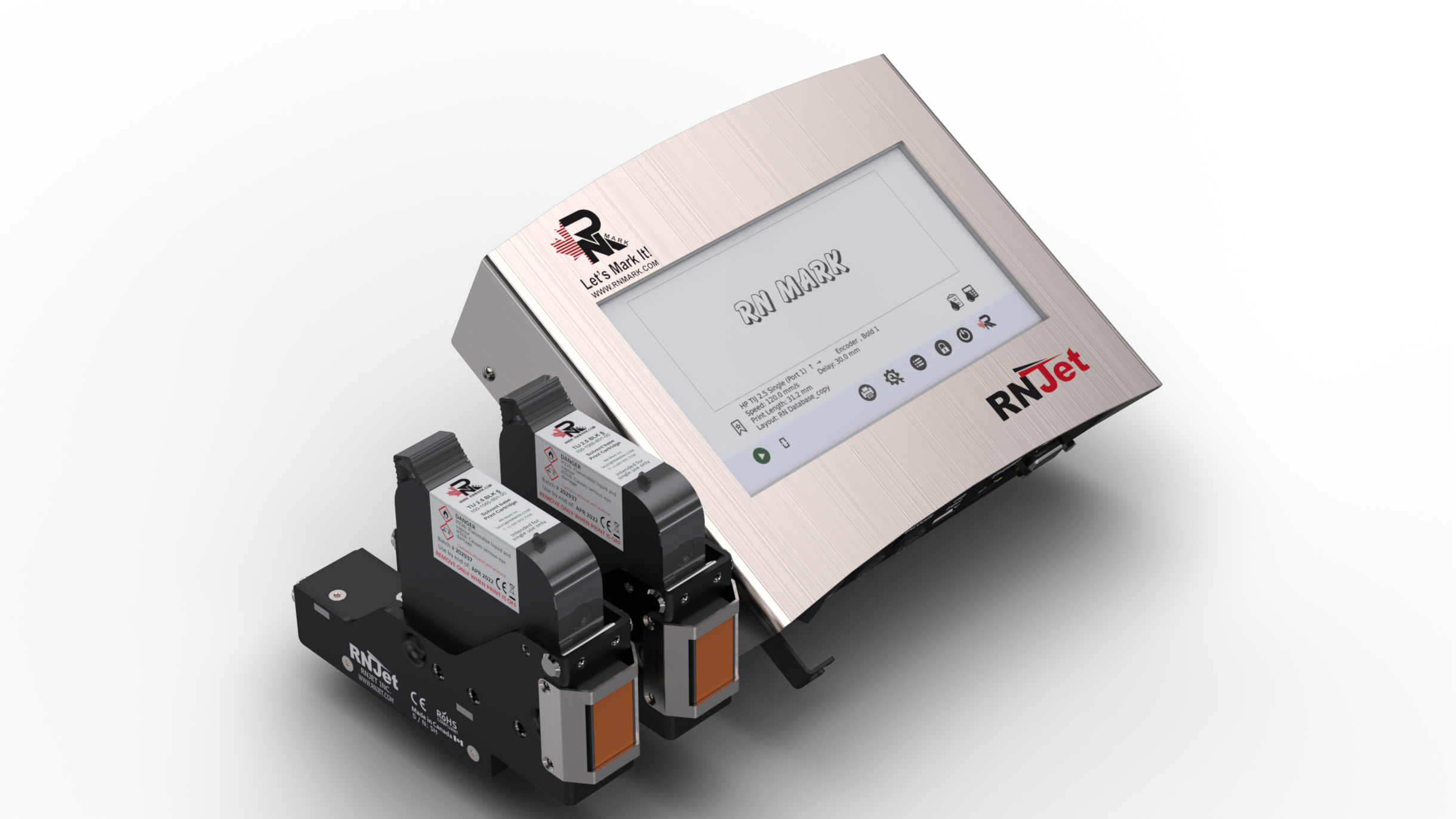
| Feature Comparison | RNJet T2 | RNJet T2 ST | RNJet T4 ST |
|---|---|---|---|
|  | | |
| Technology | Thermal Inkjet | Thermal Inkjet | Thermal Inkjet |
| Ink System | Cartridge | Cartridge | Cartridge |
| No. of Print Heads | 1 | 2 | 4 |
| Max. Print Height | up to 25.4 mm (1" inch) | up to 50.8 mm (two printheads stitched) (2" inch) | up to 101.6 mm (four printheads stitched) (4" inch) |
| Printing Distance | up to 8 mm | up to 8 mm | up to 8 mm |
| Printing Speed | 90 m/min at 300 dpi | 90 m/min at 300 dpi | 90 m/min at 300 dpi |
| Ink Types | For Porous: Water Based/Solvent Based For Non-Porous: Solvent Based | For Porous: Water Based/Solvent Based For Non-Porous: Solvent Based | For Porous: Water Based/Solvent Based For Non-Porous: Solvent Based |
| Ink Drying Time for Non-Porous Material | 1 to 3 seconds | 1 to 3 seconds | 1 to 3 seconds |
| Communication | TCP/IP, RS232 for database, barcode scanners, Ethernet, USB | TCP/IP, RS232 for database, barcode scanners, Ethernet, USB | TCP/IP, RS232 for database, barcode scanners, Ethernet, USB |
| Free Technical Support | ✔ | ✔ | ✔ |
| Maintenance Free | ✔ | ✔ | ✔ |
| 7" Touch Screen Controller | ✔ | ✔ | ✔ |
| Windows Based Software | ✔ | ✔ | ✔ |
| Text, Barcode, Graphics, LOGO, Database Coding | ✔ | ✔ | ✔ |
| High-Speed Serialisation | ✔ | ✔ | ✔ |
Thermal industrial printer RNJet H1
Delivering results to challenging marking requirements.
RNJet H1 is the perfect choice for you if:
- The print’s 12.7 mm (1/2″) height is sufficient for your needs
- It is necessary to print at a speed of up to 180 m/min
- A one-second quick drying time is needed
- No mess, no maintenance, and no downtime are required
Databases printing | UDI | LOGO | Barcodes | GS1 Data Matrix | Maintenance-free | Designed for 24/7 production | Robust 7″ LCD Controller | High-speed Date Coder | Print up to 8 lines | Best for Track and Trace
Thermal industrial printer RNJet H2
Delivering results to challenging marking requirements.
RNJet H2 is the perfect choice for you if:
- The print’s 12.7 mm height with each head
- Perfect for cannabis plastic pouches to illuminate paper labels
- A one-second quick drying time is needed
- No mess, no maintenance, and no downtime are required
Databases printing | UDI | LOGO | Barcodes | GS1 Data Matrix | Maintenance-free | Designed for 24/7 production | Robust 7″ LCD Controller | High-speed Date Coder | Print logo up to 50 mm (2″)
Thermal industrial printer RNJet H4
Delivering results to challenging marking requirements.
RNJet H4 is the perfect choice for you if:
- Print up to 12.7 mm height with each head
- Perfect for cannabis plastic pouches to illuminate paper labels
- A one-second quick drying time is needed
- No mess, no maintenance, and no downtime are required
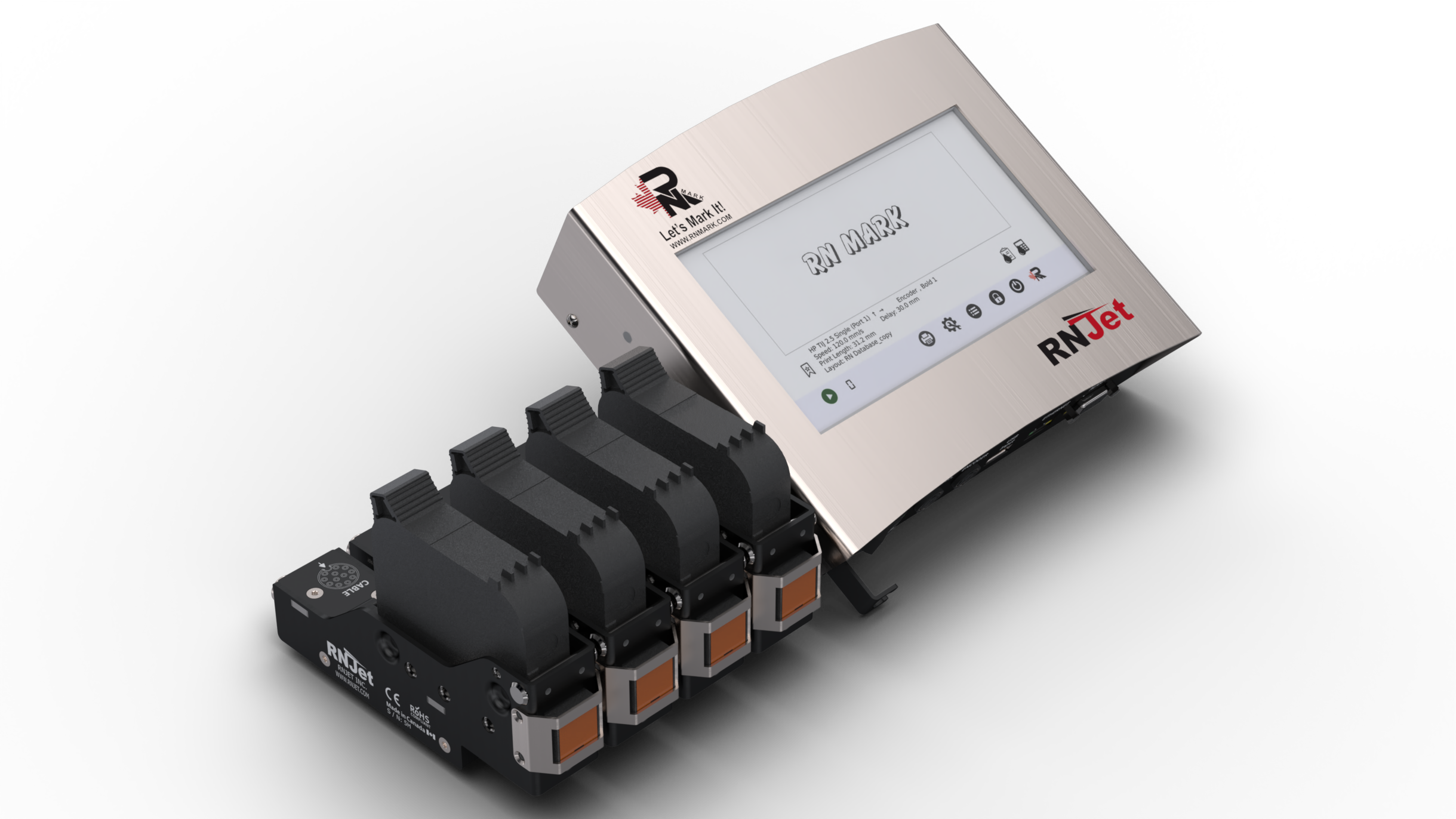
Databases printing | UDI | LOGO | Barcodes | GS1 Data Matrix | Maintenance-free | Designed for 24/7 production | Robust 7″ LCD Controller | High-speed Date Coder | Print logo up to 50 mm (2″)
TIJ Printer RNJet T1
Delivering results to challenging marking requirements.
RNJet T1 is the right fit for you if:
- The print’s 25 mm (1″) height is required for your needs
- It is necessary to print at a speed of up to 90 m/min (300 dpi)
- A one-second quick drying time is needed
- No mess, no maintenance, and no downtime are required
Databases printing | UDI | LOGO | Barcodes | GS1 Data Matrix | Maintenance-free | Designed for 24/7 production | Robust 7″ LCD Controller | High-speed Date Coder | Dual Head Printing | Printing on Traversing device variable info
Thermal industrial printer RNJet T2 ST
Delivering results to challenging marking requirements.
RNJet T2 ST is the perfect choice for you if:
- The print’s 50 mm (2″) height is sufficient for your needs
- It is necessary to print at a speed of up to 90 m/min (300 dpi)
- A one-second quick drying time is needed
- No mess, no maintenance, and no downtime are required
Databases printing | UDI | LOGO | Barcodes | GS1 Data Matrix | Maintenance-free | Designed for 24/7 production | Robust 7″ LCD Controller | High-speed Date Coder | Print up to 8 lines | Best for Track and Trace
TIJ Printer RNJet T4 ST
Delivering results to challenging marking requirements.
RNJet T4 ST is the right fit for you if:
- The print’s 100 mm (4″) height is required for your needs
- It is necessary to print at a speed of up to 90 m/min (300 dpi)
- A one-second quick drying time is needed
- No mess, no maintenance, and no downtime are required
Databases printing | UDI | LOGO | Barcodes | GS1 Data Matrix | Maintenance-free | Designed for 24/7 production | Robust 7″ LCD Controller | High-speed Date Coder | Dual Head Printing | Printing on Traversing device variable info
Thermal industrial printer RNJet T4
Delivering results to challenging marking requirements.
RNJet T4 is the perfect choice for you if:
- The print’s 25.4mm (1″) height with each seperate heads (total 4 heads) which is sufficient for your needs
- It is necessary to print at a speed of up to 90 m/min (300 dpi)
- A one-second quick drying time is needed
- You want to print on plastic films or web printing with multiple heads
- No mess, no maintenance, and no downtime are required
Databases printing | UDI | LOGO | Barcodes | GS1 Data Matrix | Maintenance-free | Designed for 24/7 production | Robust 7″ LCD Controller | High-speed Date Coder | Print up to 8 lines | Best for Track and Trace
Egg Printer RNJet EP-6H+
Incredible Value, Unprecedented Performance!
The RNJet EP-6H+ is the perfect choice for you if you require printing on eggshells using USDA-approved FDG ink. Additionally, if logo printing is necessary or if you need to print on eggs for breeders, this printer is ideal. With the RNJet EP-6H+, you can enjoy a hassle-free experience as it requires no mess, no maintenance, and no downtime
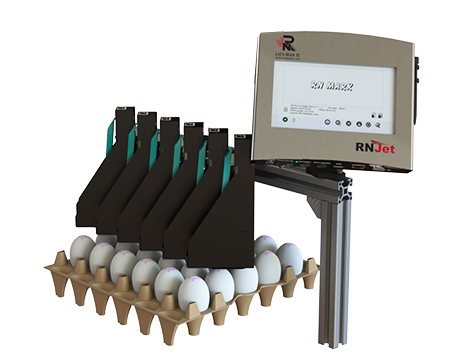
USDA-approved FDG ink | Databases printing | LOGO | Barcodes | Maintenance-free | Designed for 24/7 production | Robust 7″ LCD Controller | High-speed Date Coder
The TIJ Printer utilizes an innovative thermal inkjet technology, eliminating the need for cumbersome ink tanks and messy refills. The thermal inkjet printing with cartridge’s compact design ensures swift installation and hassle-free maintenance. Simply snap cartridge in, and you’re good to go!
Specifications of RNJet Industrial Thermal Inkjet Printer
Throw Distance
Print head can be placed up to 8mm away from the object.
Drying Time
Ink dries in 1-3 seconds on non-porous materials.
Print Speed
Print up to 180m/min at 150 dpi, or 90m/min at 300 dpi.
Storage
Internal memory can store 1000+ unique messages.
Max. Height
Print up to 25mm (1″) in height using 2 heads, or up to 12.7mm (1/2″) with each head individually.
Controller
Our reliable 7″ LCD controller is durable, dust resistant, and has fast communications. Upload any font, image, or design you want with ease.
Canadian Quality
We are a proudly Canadian company; our machines are designed and fully manufactured by our skilled team of technicians in Ontario
Printing Ink
Ink available in a variety of colors (black, red, blue, green , pigmented white, pigmented yellow, FDG blue and FDG pink ), including UV black and white.
Thermal Inkjet printers are an ideal for small character coding on different applications:
- PVC pipes
- Extrusions
- Cables and wires
- Egg cartons
- Electronic components
- Glass bottles and containers
- Plastic bottles and containers
- Rubber parts
- Tins and cans
- Metal components
- Flexible plastic films
- Shrink wraps
- Woods
- Epoxy laminate and PCB boards
- Molded plastics
- Cardboard and recycle papery
- Corrugated boxes
- PPE, sanitizers and masks
- and more!
RNSoft for RNJET Industrial Inkjet Printers
Each printer comes pre-loaded with our Windows based software, free of charge. This user-friendly software is capable of printing the following data on practically any surface you need:
- Static text
- Auto date & time
- Julian date
- Jalali date
- Auto manufacture date
- Auto expiry date
- Batch number
- Serial number
- Auto shift codes
- Logo
- Image
- QR code
- GS1 Data Matrix
- UDI
- Database
- Counter
- External text (weight & other info from scale and barcode scanner)
Our specialized Windows-based software comes equipped with a low ink indicator and ink level calculator. When the ink cartridge is inserted in RNJet TIJ printers, RNSoft measures the remaining ink level and lets you know when it’s time to replace , so you can closely monitor each individual color and cartridge, never missing a print.
With RNSoft, handling any marking requirements, big or small, is easy. The software allows up to 100 printers to be connected to one PC simultaneously.
What is Thermal Inkjet Printing
Thermal inkjet (TIJ) printing is one of the most widely adopted non-contact digital printing technologies used in industrial and commercial coding, marking, and product identification. From printing best-before dates on food packaging to serialising pharmaceutical cartons, TIJ delivers crisp, precise marks at production-line speeds with minimal operator intervention. This guide covers everything you need to know about thermal inkjet technology — how it works, where it excels, how it compares with competing technologies, and how to select the right system for your operation. Whether you are a production engineer evaluating your first TIJ installation or a packaging manager reviewing your current setup, this resource will give you the knowledge to make confident decisions.
How Thermal Inkjet Technology Works
Understanding the mechanics of thermal inkjet printing helps buyers evaluate performance claims and troubleshoot operational issues. The process centres on a printhead containing hundreds of microscopic resistive heating elements arranged in precise columns and rows.
The Drop-Formation Process
When a print command is issued, the printer’s electronics send rapid electrical pulses to selected resistors within the printhead. Each resistor heats almost instantaneously — typically reaching temperatures between 300 °C and 400 °C within a few microseconds. This sudden heat superheats a tiny volume of ink directly adjacent to the resistor, causing the ink to vaporise and form a rapidly expanding steam bubble.
The expanding bubble forces ink through a corresponding nozzle orifice, ejecting a droplet onto the substrate. As the bubble collapses, it creates a back-pressure that draws fresh ink from the reservoir into the firing chamber, ready for the next firing cycle. This entire sequence — heat, vaporise, eject, refill — happens thousands of times per second.
Printhead Architecture
Modern TIJ printheads integrate the nozzle plate, firing chambers, resistors, and ink channels into a single compact cartridge. Most designs use silicon substrates with photolithographically etched features, allowing extremely high nozzle density and tight drop-placement accuracy. Nozzle diameters typically range from 20 to 50 micrometres, controlling drop size and therefore print resolution.
Ink Recirculation and Thermal Management
Heat build-up is an inherent challenge in TIJ systems. Sustained printing raises both the printhead and ink temperatures, which can alter ink viscosity and affect drop formation. Premium TIJ printers incorporate thermal sensors and adaptive firing algorithms that modulate pulse widths in real time to compensate — ensuring consistent print quality even during extended production runs.
Ideal Applications for Thermal Inkjet Printing
Variable Data Printing (VDP)
TIJ excels at printing data that changes from product to product or batch to batch — expiry dates, lot numbers, serial numbers, weights, and prices. Because TIJ is a fully digital, non-contact process, every print can be different with no tooling changes, stencils, or print-cylinder revisions. This makes it the natural choice for any operation where regulatory compliance, traceability, or consumer information requires unique or frequently changing printed content.
Date and Batch Coding
Date coding — best-before, use-by, manufacture date — is the most universal TIJ application. TIJ printers integrate with production line PLCs and enterprise resource planning (ERP) systems to auto-update date fields, eliminating manual entry errors that can cause costly product recalls.
Barcode and 2D Code Printing
Linear (1D) barcodes such as Code 128, EAN-13, ITF-14, and GS1-128 are well within TIJ’s capability at 300 dpi. Two-dimensional codes — Data Matrix, QR Code, PDF417 — require 600 dpi for reliable scanning and are well-served by modern TIJ systems. TIJ barcode output consistently achieves ISO/IEC 15416 verification grades suitable for retail and logistics scanning environments.
Logo, Graphic, and Brand Printing
Unlike laser coders or dot-matrix printers, TIJ can reproduce brand logos, promotional graphics, and multi-line formatted text blocks. This allows manufacturers to consolidate product information, brand elements, and compliance coding into a single print station, reducing the number of separate print systems required on a line.
Pharmaceutical Serialisation
Item-level serialisation requires printing a unique 2D code — typically a GS1 DataMatrix — on each individual pack. TIJ at 600 dpi is the established technology for this application, with validated performance across major pharmaceutical packaging lines. Integration with track-and-trace software enables full aggregation from unit to pallet level.
Addressing and Mailing
Direct mail operations use TIJ arrays to print full postal addresses, barcodes, and personalised content directly onto envelopes and mailers at speeds exceeding 20,000 pieces per hour. The high resolution and consistent quality of TIJ meet postal authority print quality requirements for automated sortation.
Thermal Inkjet vs Piezo Inkjet
Piezoelectric (piezo) inkjet is the other major drop-on-demand inkjet technology. Piezo systems use mechanical deformation of a piezoelectric crystal — rather than heat — to generate pressure waves that eject ink droplets. The distinction matters for buyers because the two technologies have different strengths, ink compatibility profiles, and maintenance models.
How to Choose the Right Thermal Inkjet Printer
Step 1: Define Your Print Content Requirements
Start with the content you need to print. Consider: the smallest character height required, whether 2D barcodes are needed, whether logos or graphics are required, and the maximum number of lines to be printed. This exercise will establish your minimum resolution requirement and the print height the system must accommodate.
Step 2: Characterise Your Substrate
Identify the material and surface finish of the substrate to be printed. Distinguish between porous (corrugated, paper), semi-porous (coated paper), and non-porous (plastics, metals, glass) surfaces. This narrows your ink chemistry selection and identifies systems with validated substrate compatibility. Request ink adhesion and durability test results from shortlisted suppliers.
Step 3: Establish Your Line Parameters
Document your production line’s operating characteristics: maximum and minimum substrate speed, available mounting space and throw distance, ambient temperature and humidity range, and any environmental factors such as dust, moisture, or vibration. These parameters determine whether a standard TIJ system will function correctly or whether ruggedised or specialist mounting solutions are needed.
Step 4: Evaluate Integration Requirements
Determine how print data will be supplied to the printer. Will the printer be standalone (operator enters data at the printer)? Or does it need to receive data automatically from an ERP, MES, or vision inspection system? Confirm the communication protocols and integration software provided by each supplier. Request integration documentation and reference site contacts if available.
Step 5: Calculate Total Cost of Ownership
Build a TCO model for each shortlisted system using your actual print layout and estimated cartridge yield from the supplier. Include capital cost, consumables, maintenance, integration costs, and a downtime cost estimate based on mean time between failures and mean time to repair data provided by the supplier. Normalise costs over a 3-year or 5-year horizon for comparison.
Step 6: Request a Production Trial
Shortlist two or three systems and arrange production trials at your facility. Evaluate: print quality against your minimum specification, cartridge yield against supplier estimate, ease of operation and cartridge change, integration stability, and any substrate or environmental issues. Gather feedback from operators who will run the system daily — their practical assessment of usability is invaluable.
Step 7: Evaluate Supplier Support
The quality of after-sales support significantly affects the long-term satisfaction of TIJ ownership. Evaluate: response time commitments for emergency support, availability of local field engineers, availability and cost of spare parts, software update policy, and the supplier’s industry experience and reference base in your sector.